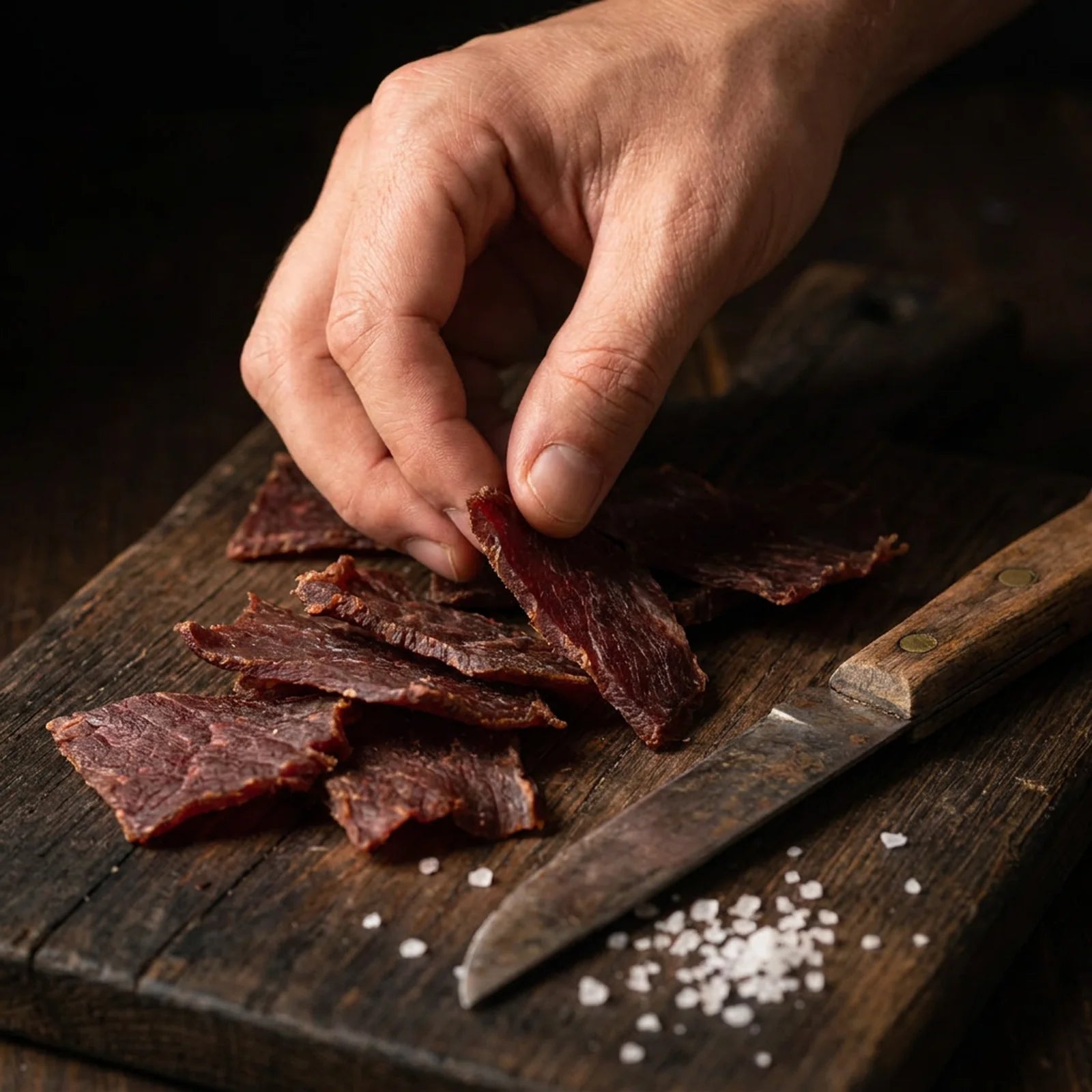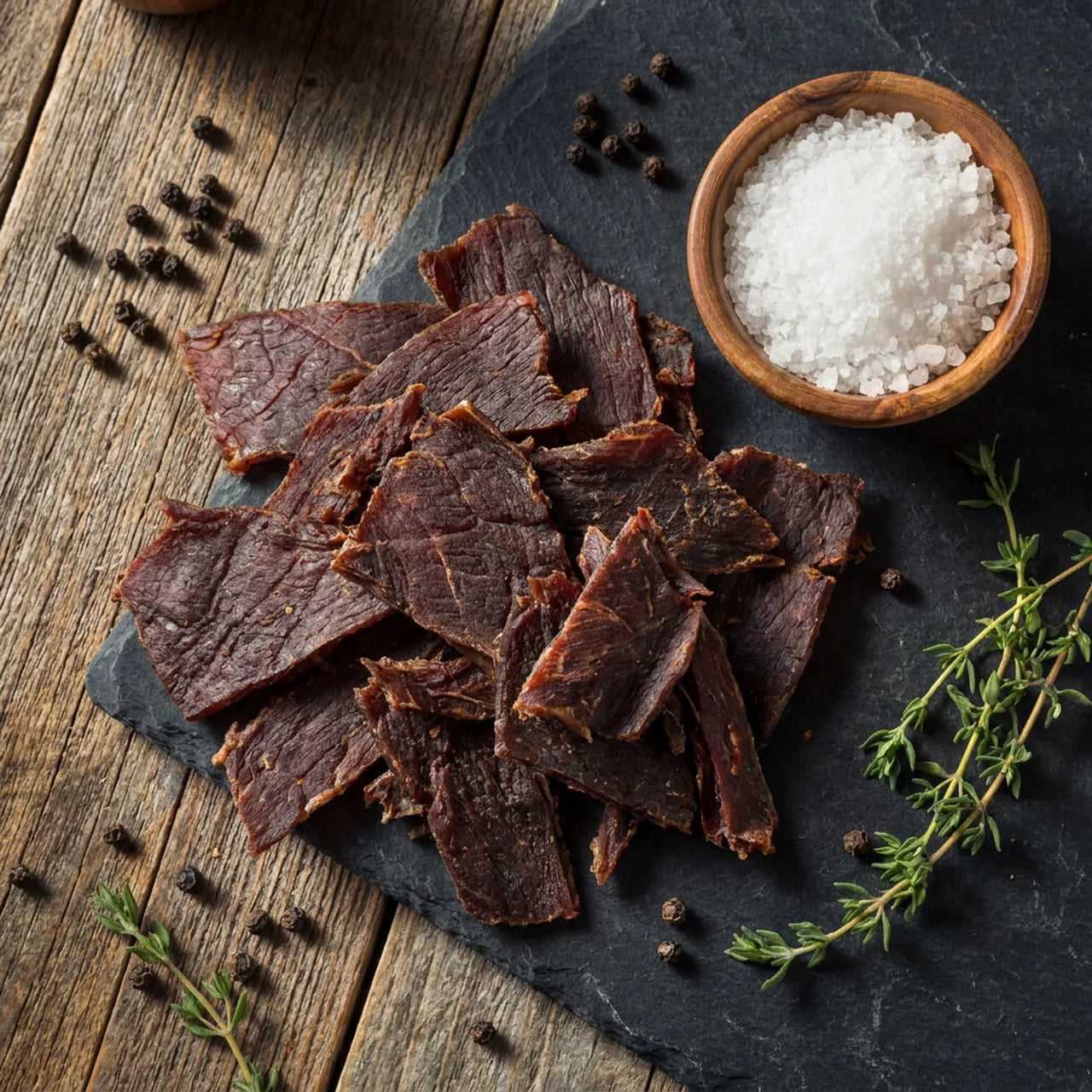
The story begins in 2002. Two owners, Rostislav and Radko, looked at the dried meat on Czech supermarket shelves and decided it simply wasn't good enough. So they sourced beef from a single farm in Moravia, brined it with Dead Sea mineral salt because the local salt was too harsh, and dried it slowly, the way their grandfather had taught them.
The first batch sold out in a week. The second sold out in three days. By the end of 2002, Indiana had moved out of the workshop and into a small production facility — the same building, expanded twice, where every piece of jerky is still made today.
"We don't make jerky for everyone. We make it for the people who actually read the back of the bag."
Twenty-three years later, the recipe hasn't changed. The salt is still from the Dead Sea. The meat is still EU-sourced and audited from a handful of farms we know by name. The drying time is still measured in hours, not minutes. Every batch still leaves the building only after passing the same two checks it has since 1999 — moisture content, and a taste test by someone whose surname appears on a payslip.
The range has grown — sixteen products today, from the original beef to wild-caught Pacific tuna at 73% protein, to a plant-based version built four years ago after a stubborn vegan colleague refused to give up. But the philosophy hasn't moved an inch. Real meat. Real protein. Real bite. Nothing that doesn't belong.